Emissions analysis: monitor NOx and hydrocarbons
The monitoring of NOx and hydrocarbons is a problem that must be considered within a broad framework which includes on the one hand the performance of the burner and on the other the compatibility with the environment.
Nitrogen oxides (NOx) are common toxic gases in combustion processes that are subject to strict government regulations. This is because they compromise both the health and safety of workers and that of the environment .
Understanding the relationship between NOx gases and other combustion wastes such as hydrocarbons is therefore fundamental to achieving the right balance between combustion , maintenance , safety and respect for the environment . In this context, NOx measurement is a determining factor in understanding whether the system needs fine-tuning to comply with the regulations.
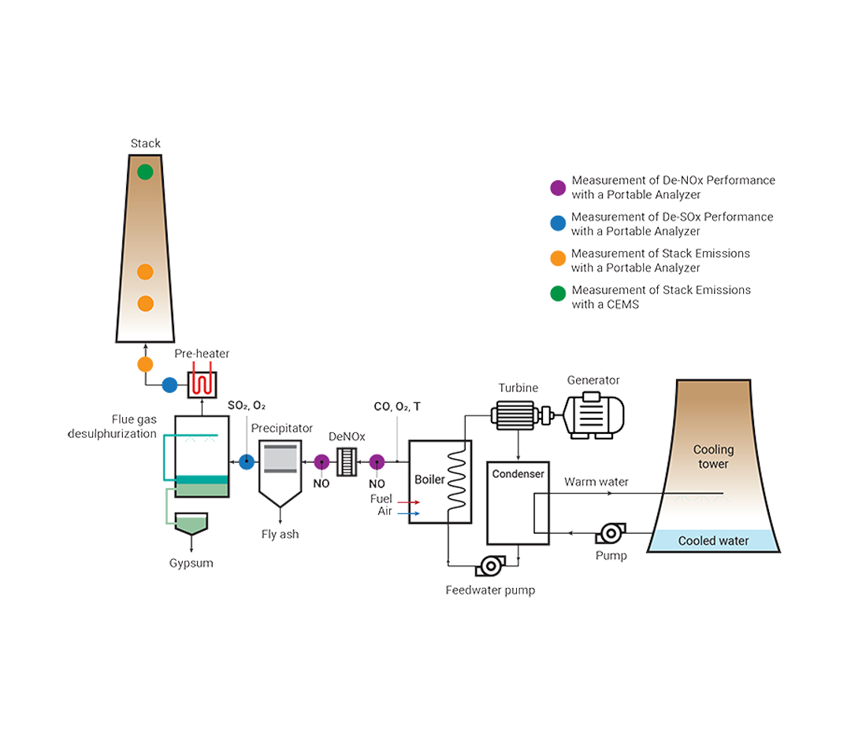
Monitoring all the gases involved in combustion, including NOx and CxHy, and understanding the relationship between them, is essential to guarantee efficiency , safety and compliance with current regulations .
Good combustion occurs when all the factors involved are close to ideal combustion , so air and fuel combine to form water (H2O), carbon dioxide (CO2) and heat. CO emissions are less than 100 ppm, NOx is within the limits set by law, hydrocarbons are few or absent and the process uses practically 100% of the fuel.
This situation is obviously not possible in a real context, but the task of those who supervise the system is to get closer to ideal combustion , thanks to the use of tools that allow the monitoring of the parameters involved.
There is usually a tendency to burn in excess air , this allows CxHy and CO emissions to be lowered to within safety levels, but at the same time it raises NOx levels above the permitted threshold, which is why monitoring is essential.
A correct and constant monitoring of combustion in the system is essential not only for efficiency, but also for its maintenance.
In fact, in the event of burner malfunctions, CxHy and CO levels rise , indicating decrease in efficiency and safety , as well as a increase in production costs . The use of analyzers allows detect the onset of these problems in a timely manner and intervene accordingly.
The solution proposed by Seitron is Chemist 600 . This is a portable emissions analyzer capable of mounting up to 6 gas sensors configurable according to measurement needs.
In addition to gas monitoring the Chemist 600 also allows other measurements including flue gas and differential temperature, draft and differential pressure. The analyzer is completed with Bluetooth connectivity, an app for data analysis, replaceable sensors and of course the first level assistance offered by Seitron.
Do you want to see how the Chemist 600 has it improved maintenance efficiency in complex industrial plants?
Download our technical document with practical examples of use.